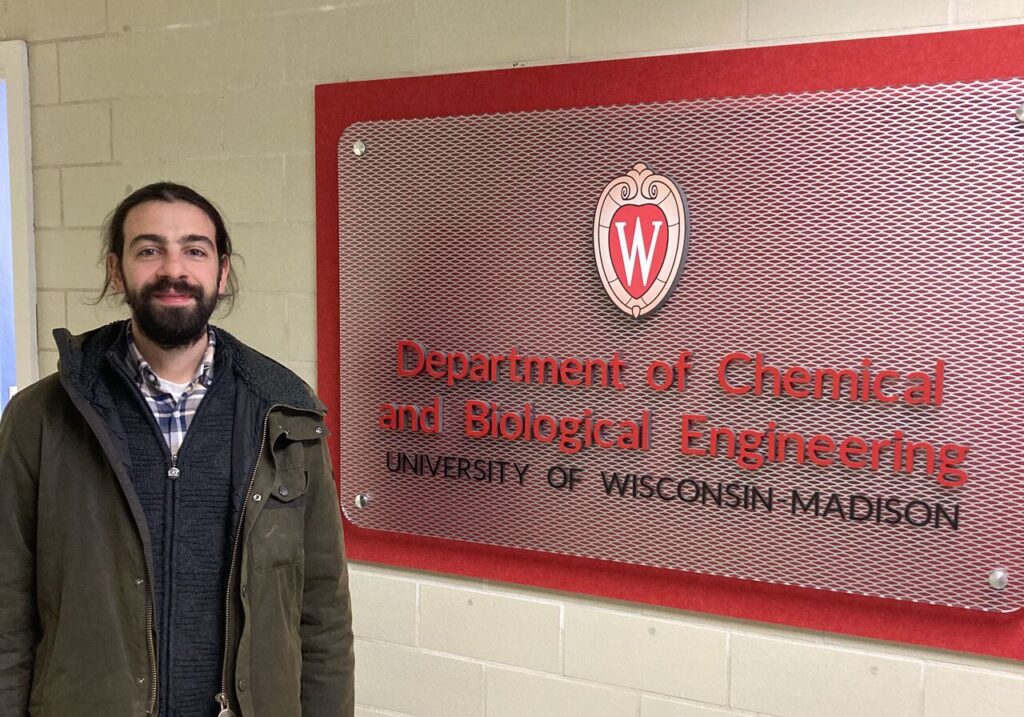
A research visit by FBK to Prof. Victor M. Zavala’s group explored shared priorities on industrial decarbonisation, power system flexibility, and long-term international cooperation pathways.
As part of its commitment to international cooperation and knowledge exchange, the FLEXIndustries project is fostering connections with leading universities and institutes outside Europe. In this context Francesco Ghionda, a researcher from project partner Fondazione Bruno Kessler (FBK) carried out a research visit to the Chemical Engineering Department at the University of Wisconsin, Madison, hosted by Professor Victor M. Zavala’s research group.
The visit provided an opportunity to examine how two research entities working in complementary and synergistic areas can structure an international cooperation strategy. Discussions focused on shared research priorities such as industrial decarbonisation, energy systems resilience, and competence areas linked to the security of critical raw materials. In parallel, the exchange explored potential frameworks to support longer-term collaboration. These included the development of joint research and innovation initiatives under shared funding schemes, participation in international consortia, and future researcher exchange programmes aimed at consolidating sustained cooperation.
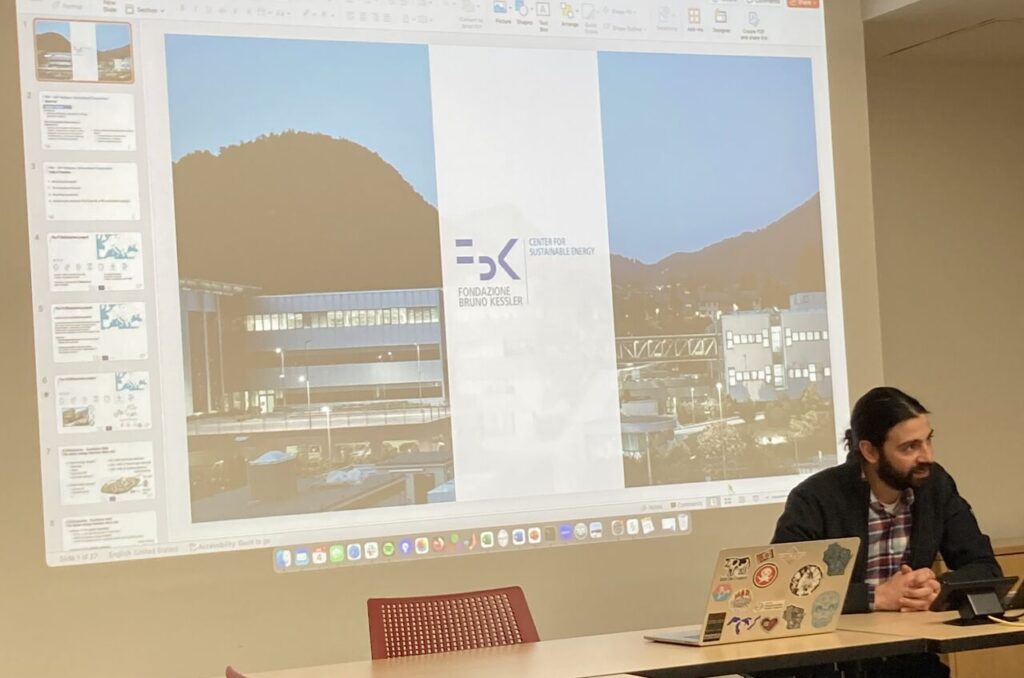
A dedicated seminar with Prof. Zavala’s group also helped strengthen mutual understanding of ongoing work. During the session, the FLEXIndustries project was presented, including its overall objectives and the industrial sectors involved. The discussion also highlighted current demonstrations at the Suanfarma Italia site, showcasing innovative solutions deployed in a real industrial environment and illustrating how FLEXIndustries activities extend from research to real-world implementation.
The exchange confirmed a key trend: as renewable energy sources continue to scale rapidly, research and innovation efforts are increasingly shifting toward grid resilience and market security. Across the United States and Europe, and within Prof. Zavala’s research group, there is a growing focus on advanced optimisation and decision-support tools to help policymakers navigate the complexity introduced by high shares of renewables, spanning market redesign, physical system optimisation, and evolving regulatory frameworks.
A central theme of the discussions was the pivotal role of flexibility as an enabling resource for future power systems. Research presented and discussed during the visit emphasised the need to quantify the economic value and resilience benefits that flexibility, provided by both established and emerging actors such as batteries, industrial facilities, buildings, and data centres, can offer to the grid.
From a cooperation perspective, the visit also highlighted the evolving context for international research collaborations, particularly where broad overarching funding frameworks are not available. In such cases, participation in research and innovation consortia can increasingly depend on bilateral agreements between countries, making structured cooperation planning even more relevant.
“Overall, the visit represented a valuable step in FLEXIndustries’ international cooperation activities, enabling a rich exchange on the global energy transition and on the growing role of digital tools, including AI, in supporting decision-making for system design and operational strategy validation. The discussions also underscored emerging opportunities linked to high shares of variable renewables, and the increasingly important role of energy storage technologies and large prosumers in the energy systems of the future” concludes dr. Ghionda.
Photo credits: Francesco Ghionda