How six European plants learned to turn their energy use into a source of flexibility, as described and analysed in the project's final publication.
Industry accounts for 27% of the EU’s energy consumption, more than half of which goes to energy-intensive sectors. During the 2021–22 crisis these companies saw electricity prices rise by more than 400%, while a grid increasingly fed by wind and solar power came to depend on consumers able to shift load, store energy and give flexibility back to the system. When the FLEXIndustries project surveyed the market in 2023, however, it found only two commercially relevant flexibility-management tools, and neither of them combined forecasting, market participation and real-time optimisation.
Today the Horizon Europe project FLEXIndustries publishes Industrial Flexibility in Practice, its final Innovation Handbook, which brings together what the consortium has learned over four years of work: a common method for measuring how much flexibility a plant can safely offer, the enabling technologies installed at six demonstration sites, and the Dynamic Energy & Process Management Platform, which turns forecasts of prices, demand and renewable output into operating plans for the following day. Running through the whole handbook is the idea that flexibility can be treated as a product, to be quantified, priced and traded without compromising production, quality or safety.
Results from the factory floor
- At Fertinagro Nutrigenia in Utrillas (Spain), a 1 MW heat exchanger fed with steam from the existing biomass boiler now preheats the combustion air of the dryer, and between January and July 2026 it supplied 534 MWh of heat, saving about 39.5 tonnes of natural gas and 108 tonnes of CO₂.
- At FORD Otosan in Kocaeli (Turkey), the 3.68 MWp of solar PV installed across two plants produced about 3.8 GWh between August 2025 and July 2026, all of it consumed on site.
- At MIL Oil Hellas in Serres (Greece), an Organic Rankine Cycle unit that converts waste heat from the biogas engine into electricity ran for 1,745 hours between February and August 2026, generating 99.4 MWh of net electricity.
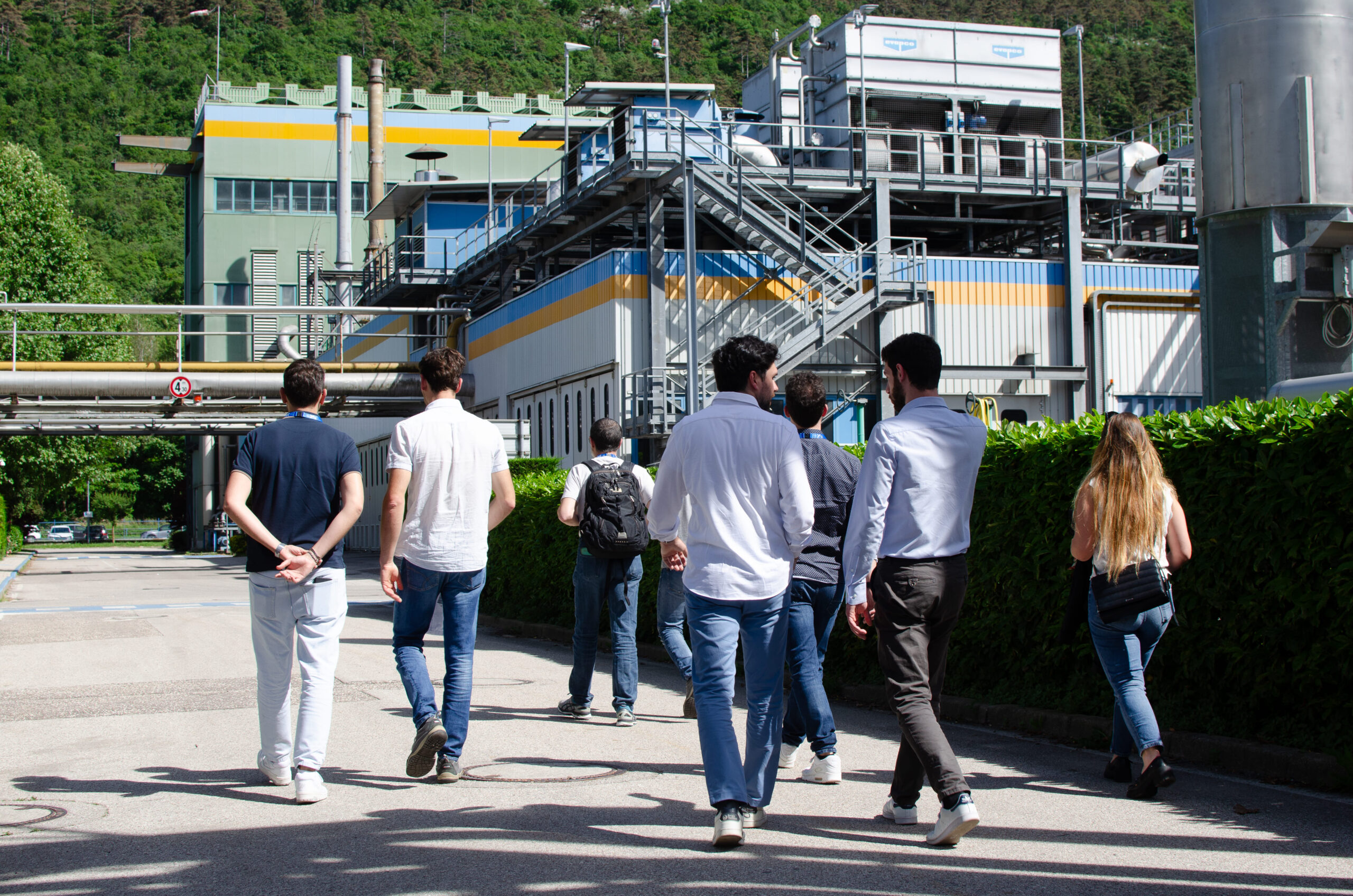
- At Suanfarma Italia in Rovereto (Italy), the platform is already running live, with seven cooperating AI agents producing an optimised next-day plan for the fermentation process in about five seconds.
- At K-Flex in Poland, contaminated flue gas led the partners to replace the planned ORC unit with a self-cleaning heat exchanger, which together with a 635 m² solar thermal field is expected to save 514 tonnes of CO₂ per year.
- At Stomana Industry in Pernik (Bulgaria), a 150 kWel Organic Rankine Cycle unit coupled with a 50 kWh battery has been installed to turn waste heat from the steel furnace into electricity and, once commissioning is complete, is expected to save about 989 tonnes of CO₂ per year.
From demonstration to adoption
The final chapter looks beyond the end of the project, setting 2028 as the target for market entry of the battery-plus-energy-management solution and the high-temperature heat pump, and 2030 for the novel waste-heat power unit. It also presents eleven best practices for industrial flexibility, co-developed with five US institutions: Duke University, the University of Wisconsin-Madison, Princeton University, the University of Colorado Boulder and the National Laboratory of the Rockies (formerly NREL).
The Innovation Handbook is available for free download at this link.
Those who prefer to see the results rather than read about them can also watch the FLEXIndustries final video, which presents the project and its demonstration sites and is available at https://youtu.be/U129yQG6QMI?si=p000BL_F07xmoNva.
Photo credits: Leonardo Improta, Fondazione ICONS