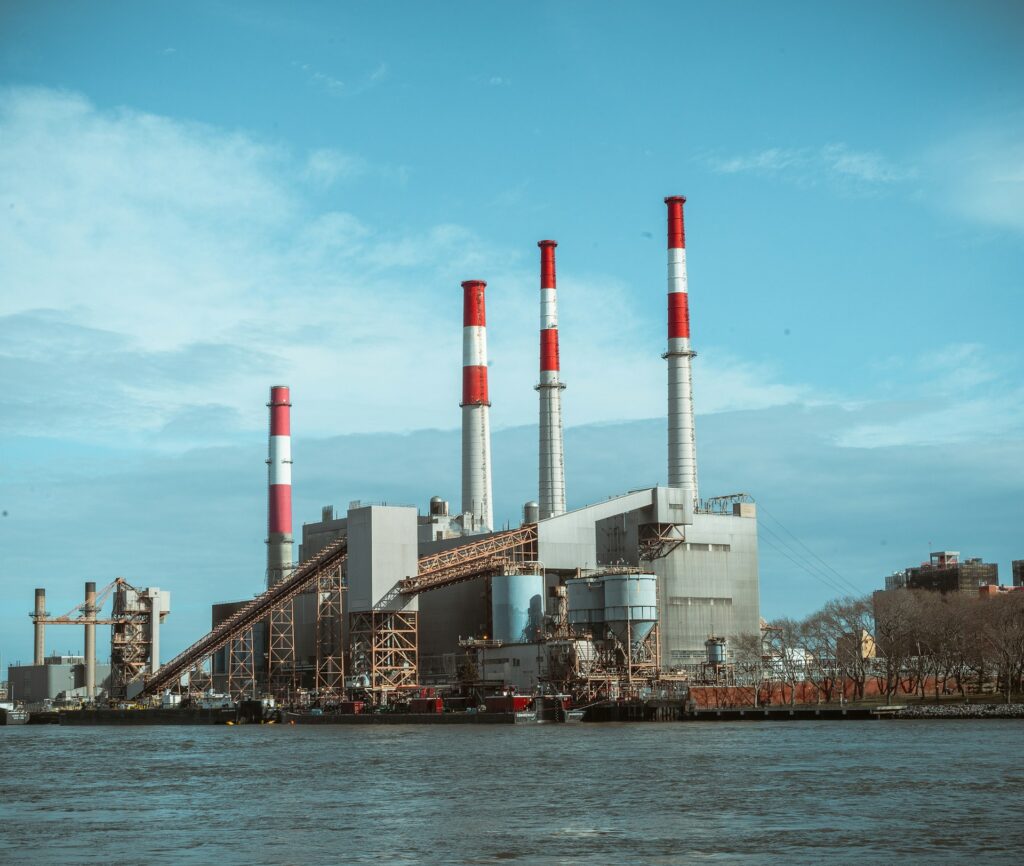
FLEXIndustries researchers modelled a refinery's energy system hour by hour for a full year, and found that flexible use of existing gas turbines can cut emissions by up to 7.2% at no extra cost.
A new open-access study by researchers from Fondazione Bruno Kessler (FBK), a partner in the FLEXIndustries project, shows that oil refineries can meaningfully reduce their carbon emissions while keeping annual energy-system costs broadly unchanged by making smarter, more flexible use of the generation assets they already operate. The published paper models a refinery’s complex energy system hour by hour across a full year to identify cost-optimal decarbonisation pathways.
Refineries are among the hardest industries to decarbonise, accounting for roughly 4% of global greenhouse gas emissions. They run as tightly coupled “multi-energy systems”, in which electricity, steam at several pressure levels, process fuels and cooling interact across continuous, safety-critical processes. As the paper notes, this need for an uninterrupted, stable energy supply directly conflicts with the intermittency of variable renewables such as solar, making their integration especially challenging.
To address this, the FLEXIndustries team at FBK built a data-driven digital replica of a refinery’s energy system using the open-source modelling framework PyPSA (version 0.35.2). Calibrated on real operational data and validated against plant measurements, the model simulates all 8,760 hours of a year at hourly resolution and, unusually, explicitly tracks the internal fuel streams that refineries generate and must continuously balance. Within this framework the consortium compared flexibility, renewable-generation, storage and electrification options on a like-for-like cost basis.
The results are striking. As the authors report, “the identified cost-optimal solutions… achieve annual emissions reductions of up to 7.2% of around 600 ktonCO₂eq/y while maintaining annual system costs comparable to those of the reference case.” Across every scenario, flexibly scheduling the refinery’s existing gas turbines emerged as the main driver of savings, letting the plant adapt its energy dispatch to electricity-market price signals and absorb more renewable power.
In short, the study offers energy-intensive industries a practical, transferable tool for planning cost-effective decarbonisation under real operating conditions.
Read the full open-access publication here.
Photo credits: Alex Simpson via Unsplash